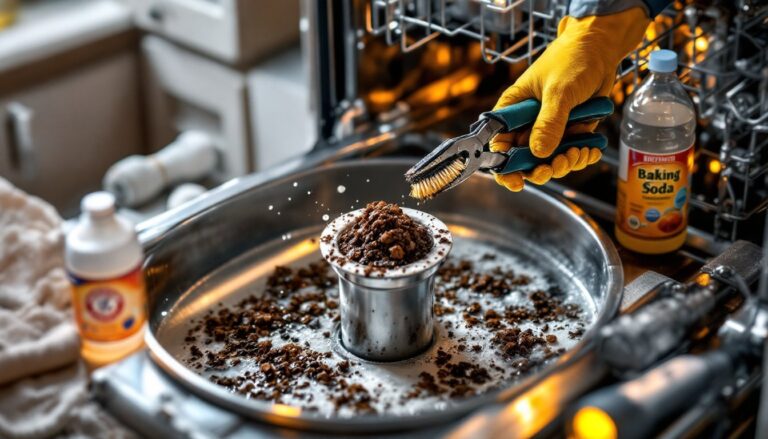
A Maytag dishwasher that leaves dishes spotty, grimy, or covered in food residue is one of the most frustrating appliance failures, especially when the machine is still relatively new. The good news: most cleaning problems don’t mean your dishwasher is broken or headed for replacement. Poor cleaning performance usually points to one of a handful of fixable culprits: clogged spray arms, a full filter, wrong detergent type, a faulty door seal, or mineral buildup. Before calling for service or tossing the machine, work through these troubleshooting steps yourself. Many homeowners solve the problem in under an hour with nothing more than a flathead screwdriver and some white vinegar.
Table of Contents
ToggleKey Takeaways
- Most Maytag dishwasher not cleaning issues are fixable without professional service by addressing clogged spray arms, full filters, detergent problems, faulty door seals, or mineral buildup.
- Clear spray arm nozzles with white vinegar and a paperclip, and check the wash filter monthly—a clogged filter is one of the top reasons for poor wash performance.
- Use the correct dishwasher detergent type (tablets, pods, or liquid formulas) and fill the dispenser to the MAX line, as underfilling is a surprisingly common cause of weak cleaning.
- Inspect door gaskets for cracks and ensure the door latch engages properly, since water leaks from a faulty seal will reduce pressure and leave dishes inadequately cleaned.
- Descale your Maytag dishwasher monthly in hard-water areas using white vinegar or commercial descaling powder to dissolve mineral deposits that restrict water flow and reduce cleaning power.
- Verify your hot water heater is set to at least 120°F (ideally 130–140°F) because cold inlet water prevents detergent from dissolving properly and significantly reduces cleaning action.
Check the Spray Arm and Nozzles
The spray arm is the rotating component inside your Maytag dishwasher that sprays water during the wash cycle. If the nozzles (the small openings on the spray arm) are clogged with mineral deposits, food particles, or soap scum, water won’t reach your dishes evenly, and cleaning suffers dramatically.
Start by removing the lower rack and inspecting the spray arm directly. Look for visible debris or white, crusty buildup around the nozzle holes. If you spot blockages, remove the spray arm by unscrewing or unclipping it (your model’s manual will show the exact method). Soak it in hot water mixed with white vinegar for 15–20 minutes, then use a straightened paperclip or a small pipe cleaner to gently clear each nozzle.
While the spray arm soaks, check the upper spray arm if your model has one. Clogs are just as common there. After clearing the nozzles, rinse both arms thoroughly under running water and reinstall them, making sure they spin freely without rubbing against the tub walls.
A quick preventive measure: rinse heavily soiled dishes before loading them. Food debris doesn’t just stick to dishes, it also gunks up your spray arms over time.
Clean or Replace the Wash Filter
Every Maytag dishwasher has a wash filter (also called a pump filter or strainer) at the bottom of the tub. This catches large food particles so they don’t recirculate during the wash cycle. A full or dirty filter restricts water flow and leaves dishes unclean.
Locate the filter, it’s usually a cylindrical or flat mesh screen in the bottom center of your tub. Many models require a simple quarter-turn counterclockwise to remove it. Once out, rinse it under warm running water and scrub away any trapped food or slime with an old toothbrush. For stubborn buildup, soak it in hot vinegar and water for 10 minutes, then brush again.
If the filter is cracked, warped, or hasn’t improved cleaning after a thorough cleaning, replace it. Replacement filters are inexpensive (typically $20–$50) and available through Maytag’s parts department or online retailers. Installing a new filter takes less than two minutes.
Check the filter monthly if you run your dishwasher frequently or if family members aren’t rinsing dishes well before loading. A clogged filter is one of the top reasons for poor wash performance, so don’t skip this step.
Verify Your Detergent Type and Amount
Using the wrong detergent or the wrong amount is a surprisingly common culprit behind weak cleaning. Many homeowners assume all dishwasher detergents are equal, but they’re not, and the amount matters just as much.
Check what you’re currently using. Maytag recommends tablets, pods, or liquid detergent formulated for automatic dishwashers, not hand-washing liquid or generic all-purpose cleaners. Hand soap will create excessive suds and cause poor rinsing. If you’ve switched to a budget brand or an older product, that could be the issue.
Fill the detergent dispenser (or dosing compartment) to the MAX line. Most Maytag models show a fill line clearly marked on the dispenser lid. Underfilling, a common mistake, means insufficient detergent for the water volume and soil load. If your local water is hard (high mineral content), you may need the maximum dose or a detergent boost.
Electrolux, Whirlpool, and other major manufacturers have published findings that auto-dosing detergent dispensers often underfill slightly. Hand-filling to the max line gives you more control and often improves results immediately.
Switch to Pod or Liquid Detergent
If you’re using powder detergent, consider switching to pods or liquid formulas. Powder doesn’t dissolve as reliably in shorter cycles or cooler water, a growing issue as modern dishwashers prioritize energy efficiency. Pods and liquids dissolve faster and distribute more evenly throughout the wash.
That said, not all pods are created equal. According to testing by Good Housekeeping, premium pods from trusted brands outperform budget versions by 15–30% in real-world conditions. Spend a little more if your current detergent isn’t delivering results.
Examine the Door Latch and Seals
If the door doesn’t seal properly during the wash cycle, water leaks out and pressure drops, leaving dishes partially or inadequately cleaned. A faulty latch or deteriorated door gasket (the rubber seal around the perimeter of the door) can cause this.
Open the door and inspect the rubber gasket for cracks, hardening, or visible wear. Press your finger along it: it should feel pliable and snug in its channel. If it’s cracked or pulling away, it needs replacement. Most Maytag gaskets cost $30–$80 and are user-installable, though the process varies by model.
Next, check the door latch mechanism. Close the door firmly and listen for a solid click. The latch arm (a plastic or metal catch on the door frame) should engage smoothly with the strike (the corresponding catch on the tub). If the latch doesn’t catch, or if you hear grinding or cracking sounds, the latch may be broken or misaligned.
For a minor misalignment, loosen the strike slightly and shift it until the door closes and latches smoothly. If the latch itself is cracked or the mechanism won’t engage, it’s time for a replacement, a job best left to a technician unless you’re comfortable disassembling the door panel.
A quick test: run a short cycle and watch from a distance. If water sprays from the door edges or drains prematurely, a seal or latch failure is the likely cause.
Run a Cleaning Cycle and Descale
Hard water (water high in calcium and magnesium minerals) leaves deposits inside your Maytag that restrict water flow and reduce cleaning power. If you live in a region with hard water, descaling is essential maintenance, not optional.
Place a bowl filled with 2 cups of white vinegar in the bottom rack (not in the detergent dispenser, the acidity needs to disperse throughout the entire cycle). Run the hottest wash cycle available, typically labeled “Sanitize,” “Heavy,” or “Pots & Pans.” The vinegar dissolves mineral buildup on the heating element, spray arms, filter, and interior walls. Do this monthly in hard-water areas, quarterly elsewhere.
For stubborn mineral deposits, use a commercial dishwasher descaling powder like Affresh or Finish. Follow the product instructions, most work similarly to the vinegar method. Today’s Homeowner’s maintenance guides recommend descaling before it becomes visible inside the tub: prevention beats heavy scrubbing.
After descaling, run a full normal wash cycle with your regular detergent to rinse away any vinegar smell. Your spray arms should spray more forcefully, and dishes should emerge noticeably cleaner.
If you notice poor results even after descaling and replacing the filter, check your water temperature. Your hot water heater should be set to at least 120°F (ideally 130–140°F for dishwashers). Cold inlet water prevents detergent from dissolving properly and reduces cleaning action significantly.
Conclusion
A Maytag dishwasher that isn’t cleaning often just needs attention to the basics: clear spray arm nozzles, check the filter, use the right detergent in the right amount, verify the door seals, and descale mineral buildup. Walk through these steps methodically, and you’ll restore performance in most cases. If you’ve addressed all of these issues and cleaning still falls short, the heating element or circulation pump may be failing, a sign to call a qualified technician or consider professional service.