A clogged drain is one of those home problems that sneaks up fast. One day your shower’s draining fine, and the next you’re standing in a puddle of murky water. Frisco homeowners face drain issues year-round, mineral deposits from hard water, tree roots creeping into older pipes, and everyday buildup all take their toll. The good news? Not every clogged drain requires a professional plumber with a $200+ service call. This guide walks you through the most common drain problems in Frisco, shows you which DIY drain cleaning methods actually work, and tells you honestly when it’s time to pick up the phone and call in a pro.
Table of Contents
ToggleKey Takeaways
- Drain cleaning in Frisco can start with DIY methods like plungers, hand augers, and the baking soda and vinegar treatment, which cost under $30 and effectively solve most slow drains.
- Common drain problems in Frisco include hair and soap buildup in bathrooms, grease blockages in kitchens, mineral deposits from hard water, and tree root infiltration in older neighborhoods.
- Professional drain cleaning is necessary when water backs up into multiple fixtures, the main sewer line is blocked, or DIY attempts fail after trying twice, to avoid pipe damage.
- Preventive maintenance like using drain screens, avoiding pouring grease down sinks, and weekly hot water flushes can keep Frisco drains clear and reduce the need for costly repairs.
- When hiring a drain cleaning professional, request free estimates, video camera inspections, and confirmation of drain-safe methods and work warranties to ensure quality service and fair pricing.
Common Drain Problems Affecting Frisco Homes
Frisco’s suburban sprawl comes with a predictable mix of drainage headaches. The most common culprit is hair and soap buildup in bathroom drains, bathroom fixtures accumulate a matted tangle of hair that traps soap residue and creates a slow drain within weeks. Kitchen drains see different problems: grease solidifies as it cools and binds to mineral deposits on pipe walls, choking off water flow. Hard water is a particular issue in North Texas: mineral deposits (mostly calcium and magnesium) gradually coat the inside of pipes and reduce their effective diameter.
Older Frisco homes, especially those built in the 1980s and 1990s, often have cast iron or galvanized steel pipes that rust from the inside. You’ll notice drains that are mysteriously slow even though no obvious blockage: that’s corrosion narrowing the pipe’s interior. Tree roots are another serious problem in Frisco’s tree-heavy neighborhoods. Roots seek moisture and can infiltrate underground sewer lines through small cracks, creating blockages that no plunger will fix. Finally, improper slope during installation or shifting soil can cause toilet backup or kitchen sink standstills.
Most slow drains start small, water takes a few extra seconds to disappear, but without attention they become complete blockages. Catching a slow drain early makes the fix much easier, whether you tackle it yourself or call a professional.
DIY Drain Cleaning Methods You Can Try First
Before you spend money, try these proven methods. Most work best on slow drains or early blockages: they’re less effective on complete stoppages caused by major obstructions or tree roots.
Using Plungers and Basic Tools
A cup plunger (the flat-bottomed one for sinks and tubs) is your first line of defense. Fill the sink or tub with enough water to cover the plunger cup completely, this creates the seal needed for suction. Place the plunger over the drain, press down firmly, and pull up sharply 15–20 times without breaking the seal. You’re using air pressure to dislodge the blockage, not actually pulling debris out. For stubborn kitchen drains, repeat this process two or three times.
If the plunger doesn’t work, a hand auger (also called a plumber’s snake) costs $10–20 and works for hair clogs. Feed the auger cable down the drain while turning the handle clockwise: when you hit resistance, the auger’s hook either breaks up the clog or hooks the hair mat so you can pull it out. Don’t force it, stop if you feel genuine resistance that doesn’t give with gentle turning.
For tub drains, consider removing the pop-up stopper assembly first. Lift the stopper and overflow trim ring, unscrew the linkage rod inside, and pull the entire assembly out. Drain holes are often clogged by hair wrapped around the rod itself. Rinse it thoroughly, scrub with an old toothbrush, and reinstall.
Natural Solutions With Baking Soda and Vinegar
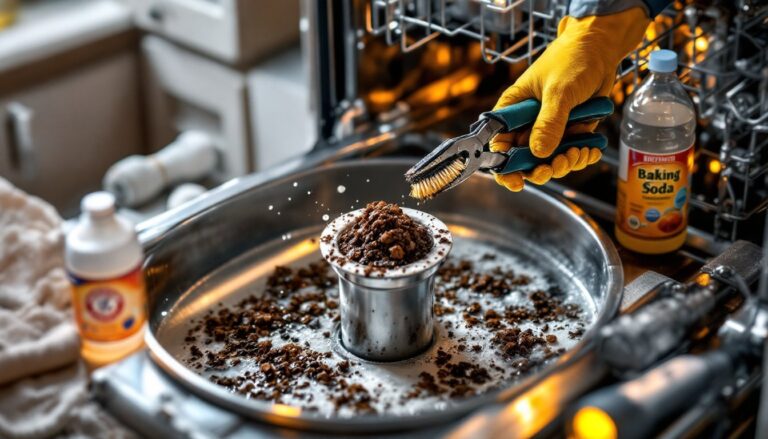
This one actually works, and it costs pennies. Pour 1/2 cup of baking soda down the drain, followed immediately by 1 cup of white vinegar. The chemical reaction fizzes and can break up minor buildup. Plug the drain with a wet cloth or stopper and leave it for 30 minutes, then flush with boiling water. The combination works best on slow drains caused by soap scum and grease: it won’t clear a hair blockage or mineral deposits in older pipes.
Repeat the baking soda and vinegar treatment weekly on slow drains as preventive maintenance. It won’t replace proper cleaning, but it keeps buildup from accumulating. For extra punch, let boiling water run down the drain for 10 seconds before the baking soda treatment. Heat softens grease and can sometimes push minor clogs through on its own.
Don’t use this method if you’ve already poured commercial drain cleaner down the drain, the chemical reaction can be dangerous and produce toxic fumes. Drain cleaners containing lye or sulfuric acid will still be present in the standing water.
When to Call a Professional Drain Cleaner
Some drain problems are beyond DIY fixes. If water backs up into your toilet, tub, or multiple fixtures at once, the blockage is likely in the main sewer line, not a spot you can reach with a plunger or snake. Main line problems usually require a professional with a motorized auger or camera equipment to diagnose the issue.
If you’ve tried plunging and hand-snaking twice with no improvement, stop before you damage the pipes. A stubborn clog often means tree roots, a collapsed section of pipe, or a buildup so thick that hand tools won’t touch it. A professional drain cleaner in Frisco can use a power auger (a motorized cable that handles serious obstructions) or a hydro-jet (high-pressure water that scours the interior of pipes). If you’re unsure which you need, many local services offer free estimates or video camera inspections that show exactly what’s blocking your drain.
Plumbers can also identify problems hand augers can’t fix. Mineral deposits and corrosion in old cast iron pipes often require replacement, not just cleaning. Video camera inspection costs $200–400 but saves you time and guesswork, a professional can tell you whether the problem is fixable or whether you need a longer-term solution. Many Frisco homeowners find that services listed on platforms like Angi provide transparent pricing and customer reviews, which helps you pick a reputable local company.
Always ask whether the service uses drain-safe cleaning methods. Some plumbers still use harsh chemical cleaners, which can damage older pipes and are harsh on the environment. High-pressure water cleaning and mechanized snakes are safer for most homes. Also confirm whether the service guarantees their work, many Frisco plumbers offer a warranty on repairs, which protects you if the problem returns quickly.
If you’re facing a first-time blockage and feel confident using basic tools, try the plunger and baking soda methods. But honestly, if those don’t work within an hour, calling a professional saves frustration and prevents accidental pipe damage. Resources like HomeAdvisor and Bob Vila offer guides on what to expect when hiring a plumber, and many provide cost-comparison tools to understand fair pricing in your area. For budget-conscious homeowners, finding the cheapest drain cleaning service doesn’t mean cutting corners, it means comparing quotes and understanding what’s included in the price.
Conclusion
Clogged drains are annoying but almost always solvable. Start with simple tools, a plunger and a hand auger cost under $30 combined and solve most slow drains. For stubborn blockages, mineral deposits, or main line issues, a professional is worth the investment. Frisco homeowners should prioritize preventive maintenance: don’t pour grease down the kitchen sink, use drain screens to catch hair, and occasionally flush drains with hot water and baking soda. When you do need a pro, get an estimate and ask about guarantees. A quick DIY attempt saves money when it works: knowing when to call a plumber saves you from making the problem worse.