Your dishwasher works hard every day, but it can’t clean itself, and over time, mineral deposits, grease, and food residue build up inside the unit, dulling its performance and leaving spots on your dishes. That’s where dishwasher cleaning tablets come in. Unlike regular dishwashing detergent, which focuses on cleaning your dishes, dishwasher cleaner tablets are specifically formulated to dissolve buildup inside the machine itself, keeping it running efficiently and extending its lifespan. Whether you’re dealing with hard water stains, cloudy glassware, or just general maintenance, these tablets are one of the most effective and convenient solutions available. In this guide, we’ll walk you through how they work, what to look for, and best practices for keeping your dishwasher in top shape.
Table of Contents
ToggleKey Takeaways
- Dishwasher cleaning tablets dissolve during hot-water cycles to target mineral deposits, grease, and buildup inside your machine, keeping it running efficiently and extending its lifespan.
- Quality dishwasher cleaning tablets should contain citric acid or phosphoric acid for dissolving limescale, surfactants for lifting grease, and enzymes for breaking down organic matter.
- Use monthly maintenance tablets every 4 weeks for regular upkeep, or deep-clean tablets every 2–3 months if your machine has significant buildup or hard water stains.
- Always run dishwasher cleaning tablets on an empty machine with hot water and no dishes to allow cleaning agents to circulate freely and deliver maximum effectiveness.
- DIY alternatives like citric acid powder or white vinegar work for light maintenance, but commercial dishwasher cleaning tablets deliver faster, more reliable results for significant buildup or hard water.
- Consistent monthly cleaning with dishwasher cleaning tablets, combined with simple habits like rinsing dishes and inspecting spray arms, prevents serious buildup and keeps your appliance performing optimally.
How Dishwasher Cleaning Tablets Work
Dishwasher cleaning tablets dissolve during the wash cycle and release specialized cleaning agents that target the interior of your machine rather than your dishes. These tablets typically contain a mix of acids, surfactants, and enzymes designed to break down limescale, grease, and mineral buildup on the spray arms, filter basket, and interior walls.
Unlike liquid cleaners, tablets release their contents gradually as the cycle progresses, ensuring consistent coverage throughout. Most dishwasher cleaning tablets are activated by water and heat, so they work most effectively during a hot-water cycle. The acidic compounds in the formula work to dissolve stubborn mineral deposits caused by hard water, while enzymes tackle organic buildup. The result is a cleaner machine that drains better, sprays more effectively, and produces spotless dishes.
It’s important to note that these tablets don’t interfere with your regular dishwashing detergent or your dishes, they’re formulated to do their job and rinse away completely. Running a cleaning cycle with a dishwasher cleaning tablet once or twice monthly will keep your machine in peak condition without affecting normal operation.
What to Look for in a Quality Dishwasher Cleaning Tablet
Not all dishwasher cleaning tablets are created equal. When shopping for the right product, pay attention to the active ingredients, dissolve speed, and whether the formula addresses your specific water conditions.
Look for tablets that contain citric acid or phosphoric acid, which are effective at dissolving mineral deposits and limescale, the most common culprits behind poor dishwasher performance. Surfactants help lift greasy residue, and enzymes like amylase and protease break down organic matter. If you have hard water, prioritize tablets with higher acid concentrations.
The dissolve time matters too. Some tablets break apart quickly in the water, while others are encapsulated in a protective shell that dissolves gradually. Fast-dissolving options work well for heavily soiled machines, while slow-release designs ensure the cleaning agents spread throughout the entire cycle.
Also check the product label for compatibility with your specific dishwasher model. Most quality dishwasher cleaning tablets work universally, but it’s worth confirming. Third-party test results from reputable sources, such as those conducted in The Cleaning Lab tested dishwasher detergents, can help you identify trusted brands that deliver real results.
Monthly vs. Deep Clean Tablets
Many manufacturers offer two types of dishwasher cleaning tablets: monthly maintenance tablets and deep-clean tablets. Monthly tablets are lighter formulations designed for regular upkeep when your machine is relatively clean. Use these every 4 weeks or as part of your standard maintenance routine.
Deep-clean tablets pack a stronger concentration of acids and enzymes, making them ideal for machines with significant buildup, stubborn stains, or if you haven’t cleaned your dishwasher in several months. These should be used less frequently, typically every 2–3 months or when you notice performance declining. Using a deep-clean tablet on a already-clean machine won’t hurt anything, but it’s overkill and wasteful. Read your product instructions to understand which category your chosen tablet falls into and adjust your schedule accordingly.
Best Practices for Using Dishwasher Cleaning Tablets
Using dishwasher cleaning tablets correctly ensures maximum effectiveness and prevents any issues. Here’s the proper approach:
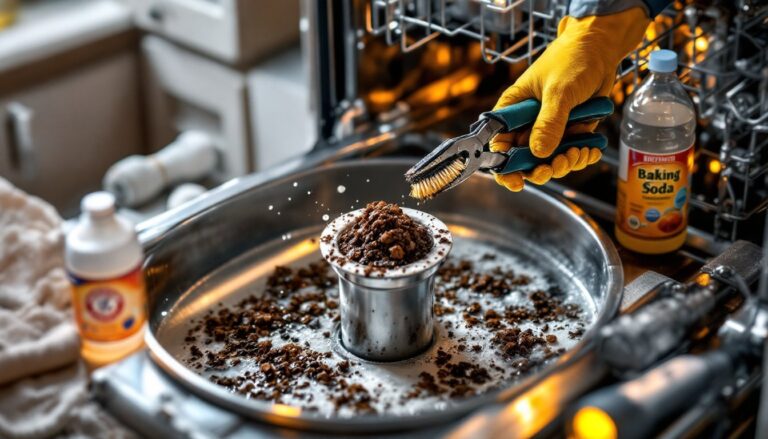
Before you start, remove any large food debris from the filter and drain. If your dishwasher hasn’t been cleaned in months, a quick rinse of visible buildup with an old toothbrush on the spray arms and filter basket will speed up the process.
Load the tablet correctly. Most tablets should be placed in the main detergent compartment at the bottom of the door, not in the pre-wash compartment. If your machine has a specific cleaning cycle, use it, many modern dishwashers include a “clean” or “maintenance” setting designed specifically for this purpose. If yours doesn’t, run the machine empty on the hottest water setting available.
Run the cycle without dishes. This is critical: never run a cleaning tablet while washing dishes. The cleaning agents need to circulate freely throughout the machine, and dishes will obstruct this process. Always run the dishwasher empty.
Choose hot water. Hot water helps the tablet dissolve faster and activates the cleaning agents more effectively. Cold or warm water cycles will still work but won’t deliver the same results, especially with hard water or heavy buildup.
Maintain consistency. Running a cleaning cycle monthly with a dishwasher cleaning tablet prevents serious buildup from occurring in the first place. It’s far easier to maintain than to deep-clean a neglected machine. If you have very hard water (which leaves visible mineral deposits), consider cleaning every 2–3 weeks instead.
DIY Alternatives to Commercial Tablets
If you prefer avoiding packaged products or want a more budget-friendly option, several household items can clean your dishwasher effectively, though they won’t be quite as concentrated or convenient as commercial dishwasher cleaning tablets.
Citric acid powder is the closest match to commercial tablets. Add ½ cup of food-grade citric acid to the main detergent compartment and run an empty hot-water cycle. Citric acid dissolves mineral deposits and limescale just as effectively as commercial formulas, and it’s inexpensive. You’ll find it in the baking aisle or online.
White vinegar is another popular choice. Pour 1 cup of white vinegar into a dishwasher-safe bowl, place it on the top rack, and run an empty hot cycle. The vinegar’s acidity tackles mineral deposits, though it’s slightly less concentrated than citric acid. Avoid pouring vinegar directly into the dishwasher, as it can damage rubber seals over time.
Baking soda works best as a secondary step. After running a vinegar or citric acid cycle, sprinkle ½ cup of baking soda on the bottom and run a short hot-water cycle. The baking soda will deodorize and remove any remaining odors.
DIY methods work best for light maintenance rather than deep cleaning. If your dishwasher has significant buildup or you have hard water, commercial dishwasher cleaning tablets deliver faster, more reliable results. They’re also more convenient if you’re managing a busy household schedule.
Maintaining Your Dishwasher Between Cleanings
Using dishwasher cleaning tablets monthly keeps your machine in good shape, but daily habits make a real difference too. After each load, rinse large food particles from dishes before loading, dried-on food builds up in filters and spray arms over time. Check the filter basket weekly and remove any debris. Most modern dishwashers have removable filters that pop out easily.
Inspect the spray arms (the rotating arms that distribute water) every few months. If the small holes are clogged with mineral deposits, soak them in warm vinegar for an hour or use a thin piece of wire to clear each hole. Clean spray arms spray more powerfully and cover more of your dishes.
If you have hard water, consider using a rinse aid plus to your regular detergent. Rinse aids help water sheet off dishes instead of pooling, which reduces spotting and mineral buildup. Fill the rinse aid reservoir according to your machine’s instructions, most only need refilling every few months.
Leave the door ajar after each cycle so moisture can escape and prevent mold growth inside. And don’t slam the door shut: a gentle push extends the latch mechanism’s life. These small habits, combined with regular dishwasher cleaning tablet use every month or two, will keep your machine running efficiently for years.
Conclusion
Dishwasher cleaning tablets are an easy, effective investment in your kitchen’s longevity. By understanding how they work and using them consistently, you’ll avoid the common pitfalls of mineral buildup and poor performance that plague neglected machines. Whether you choose commercial tablets or experiment with DIY alternatives, the key is making it part of your routine. A clean dishwasher means cleaner dishes, faster cycles, and a longer lifespan for your appliance, all for the cost of a tablet or two a month.