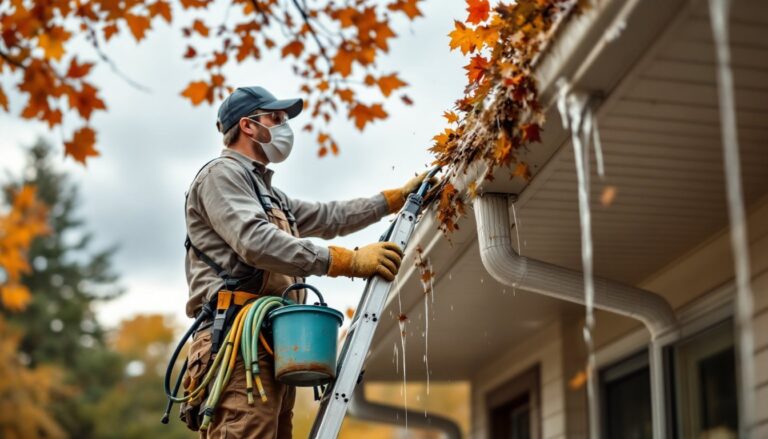
Cleaning gutters isn’t anyone’s idea of fun, but skipping it guarantees expensive problems down the road. Standing on a ladder with one hand gripping the gutter and the other reaching for debris is a recipe for disaster, and that’s where a gutter cleaning pole becomes invaluable. A gutter cleaning pole extends your reach, keeps you planted firmly on the ground, and turns a high-risk job into something manageable. Whether you’re dealing with clogged leaves, pine needles, or packed sediment, the right pole makes the difference between a quick Saturday task and a safety hazard. This guide walks you through what these tools are, which type suits your setup, and how to use one safely and effectively.
Table of Contents
ToggleKey Takeaways
- A gutter cleaning pole eliminates the need for ladder work, keeping you safely on the ground while extending your reach 15 to 30 feet to remove leaves, debris, and sediment.
- Telescoping poles are the best choice for most homeowners because they adjust from 4–5 feet to 25–30 feet, handle both single-story and multi-story homes, and weigh under 6 pounds for easy overhead work.
- Clean gutters twice a year—once in late fall after leaf drop and again in spring—using water and smooth, deliberate motions to push debris toward downspouts without forcing stubborn clogs.
- Always wear safety glasses, work gloves, and a dust mask, assemble your pole on the ground to check for damage, and avoid working during high winds or wet conditions.
- After removing debris, flush the entire gutter run and downspout separately with a hose, inspect for sagging or rust, and consider gutter guards to reduce future buildup.
- Ladder-related injuries cause roughly 500,000 annual injuries in the United States, making a gutter cleaning pole a practical investment that pays for itself in safety and time saved.
What Is A Gutter Cleaning Pole And Why You Need One
A gutter cleaning pole is a lightweight, typically aluminum shaft that extends 15 to 30 feet, with an attachment head designed to scoop, brush, or flush debris from gutters. The attachment (usually a curved scoop or brush) sits at the end, and you operate it from ground level, eliminating the need to balance on a ladder. Most poles are modular, allowing you to add or remove sections to adjust length for single-story or multi-story homes.
Why bother with one? Ladder work is the source of roughly 500,000 injuries annually in the United States. A gutter cleaning pole removes you from the equation, keeping both feet on solid ground while you clean. You’ll spot clogs faster from below, work steadier without awkward reaching, and finish the job in half the time. For homeowners with two-story houses, gutters higher than 15 feet, or anyone uncomfortable on ladders, a pole is practically non-negotiable.
Types Of Gutter Cleaning Poles And How To Choose
Gutter cleaning poles come in two main categories: telescoping and fixed-length. Your choice depends on your home’s height, storage space, and how often you’ll use the tool.
Telescoping Poles vs. Fixed-Length Options
Telescoping poles collapse down to 4–5 feet and extend to 25–30 feet. They’re adjustable, which means you can dial in exactly the reach you need without wasting energy. The trade-off: they’re slightly heavier (4–7 pounds), and joints can rattle or shift mid-task if not tightened properly. Fixed-length poles (typically 16–20 feet) are lighter, simpler, and don’t have moving parts to fail. You can’t adjust them, though, so you need to own multiple sizes for different jobs or heights.
For most homeowners, a telescoping pole is the smarter choice. You get one tool that handles one-story ranch houses and two-story colonials alike. Look for poles with friction-lock or twist-lock mechanisms, these keep sections snug without stripped threads. Test the weight in-store if possible: under 6 pounds is ideal for overhead work. Check the attachment head too. A curved scoop works best for leaf removal, while a brush attachment handles mold and silt better. Many quality poles come with swappable heads, giving you flexibility. Resources like Bob Vila and Popular Mechanics regularly review gutter tools, and their recommendations align with what pros actually use on the job.
Step-By-Step Guide To Using A Gutter Cleaning Pole Safely
Preparation And Safety Tips Before You Start
Before you touch a pole, prep the work area. Clear the ground beneath your gutters of obstacles, rocks, garden hoses, toys, so you can step back and move freely if you lose balance. Put on safety glasses and work gloves: falling debris hits fast, and sharp metal brackets or rusty fasteners hide in leaves. A dust mask or respirator is non-negotiable if mold or mildew is visible in the gutter. Many old gutters harbor mold spores that wreak havoc on respiratory systems.
Assemble your pole on the ground, extending it fully to check for damage, missing clips, or loose joints before you lift it overhead. Wet gutters are slippery and heavy, clean on a dry day when debris is easier to remove. Never work during or immediately after rain. Check the forecast: wind above 15 mph makes handling a long pole genuinely dangerous.
Start at a downspout and work along the run, angling the scoop slightly to push debris toward the drop. Work in one direction consistently so you don’t re-scatter what you’ve already cleared. Use smooth, deliberate motions: jerky movements tire your shoulders fast and invite mistakes. If you hit a stubborn clog, don’t force it. Flush the gutter with water from a hose attachment, letting water pressure break things loose. Always wear gloves when handling water and metal together, electric shock is rare but possible if you’re touching metal gutters during electrical activity nearby.
For gutters over 20 feet high or if your home is on a slope (making ladder work even riskier), consider Downspout Cleaning: Essential to understand how debris flows, and honestly, a professional service isn’t overkill, it’s insurance.
Best Practices For Effective Gutter Cleaning
Timing is everything. Clean gutters twice a year: once in late fall (after trees drop leaves) and again in spring (to clear winter silt and early debris). Homes near trees or with significant roof slope may need three passes. Set a phone reminder or calendar alert so you don’t forget.
Water is your best friend. Once you’ve removed the bulk of debris, flush the entire run with a garden hose. Watch where water goes, if it’s not flowing freely toward the downspout, there’s still a clog. Flush the downspout separately: debris often lodges there, and a backed-up downspout defeats the whole purpose. According to gutter maintenance tips, removing accumulated mold and mildew early prevents costly repairs and ice dam buildup.
Inspect for damage while you’re up there. Look for sagging sections (a sign the gutter is pulling away from the fascia), cracks, or rust-through. Catching small problems early beats emergency repairs later. If gutters are severely damaged or misaligned, that’s a call to a professional. Most homeowners can handle leaf removal: structural issues are different.
After cleaning, consider installing gutter guards (also called gutter covers or leaf guards) to reduce future buildup. They don’t eliminate cleaning entirely, but they cut it to once a year and cut the debris load significantly. No single guard works for every gutter style, so measure before buying, some are surface-mounted, others fit inside the channel.
Conclusion
A gutter cleaning pole transforms a genuinely dangerous chore into a straightforward, ground-level task. It pays for itself in peace of mind and time saved after just one or two uses. Choose a telescoping model with sturdy joints, wear your PPE, and establish a cleaning rhythm twice a year. Your gutters, and your safety, will thank you.